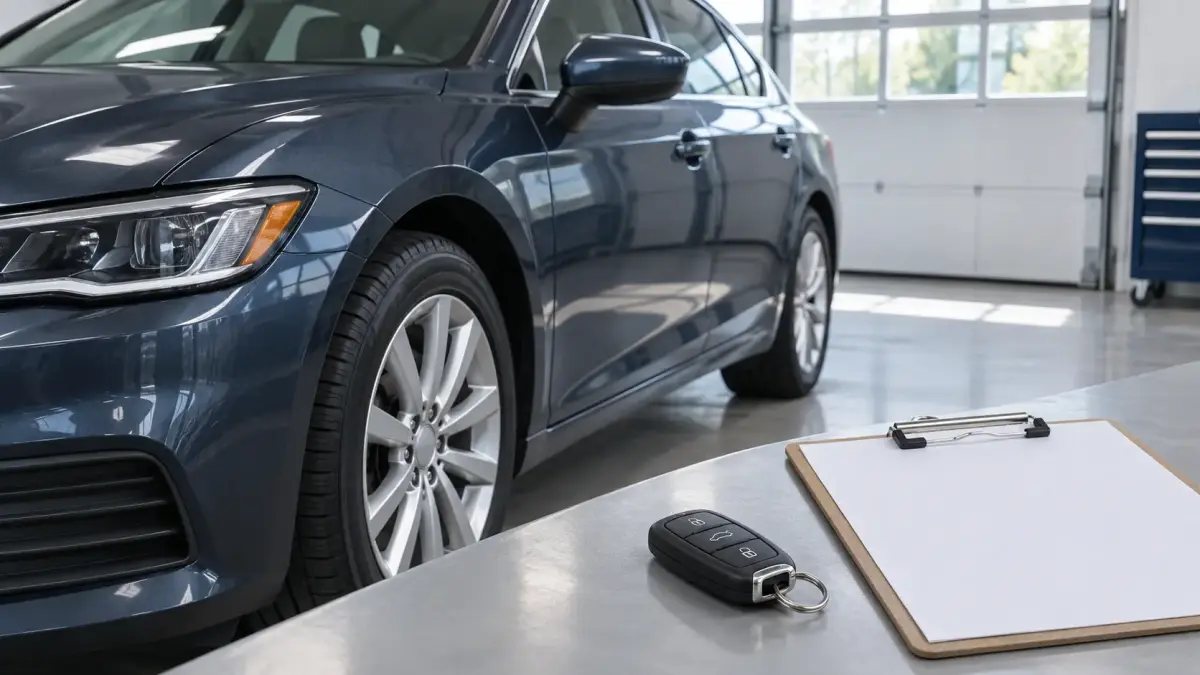
A lease disposition fee is a charge specified by your leasing company for turning in a vehicle at the scheduled end of the lease. If it applies, it can appear alongside charges for excess miles and wear. To estimate your bill, take the disposition fee and mileage terms from your signed lease, add any expected wear charges, and subtract only credits or waivers the lessor confirms.
This worksheet is for an ordinary end-of-term return of a closed-end consumer car lease in the United States. If you want to keep the car or return it early, ask for a separate purchase or early termination quote. See our lease buyout guide if you are weighing whether to buy it.
Table of Contents
Which fees can show up at the end of a car lease?
Find the signed lease, any amendments and the lessor's return instructions. Start with these three lines:
- Disposition fee. Look for a disposition, turn-in or vehicle return charge in the lease disclosures. The amount and any waiver conditions depend on the agreement and applicable law. The CFPB's Regulation M commentary on other charges explains how covered leases disclose applicable disposition charges.
- Excess mileage. Find the full-term mileage allowance, the odometer reading at delivery if needed, and the rate or method the contract uses. Check for additional mileage you already bought. Under the CFPB's Regulation M wear and use provisions, a covered motor vehicle lease's wear and use disclosure specifies the amount or method of any excess-mileage charge.
- Excess wear and use. Compare the vehicle with the lessor's written standards. Check tires, glass, dents, missing keys and other equipment. Use an itemized inspection estimate if available, and confirm whether eligible protection would reduce those specific items. CFPB's leasing guide explains the role of mileage and wear standards.
Lease return bill worksheet
Use the terms from your own lease. The dollar amounts below are hypothetical and are not averages or quotes.
| Line | What to enter | Example |
|---|---|---|
| Disposition fee | Disclosed fee if due | $395 |
| Excess mileage | Chargeable excess miles × your per-mile rate, if your lease uses one | (37,400 − 36,000) × $0.25 = $350 |
| Excess wear | Estimated billable items from the inspection | $280 |
| Other amounts due | Confirmed taxes or outstanding amounts, listed separately | $0 assumed |
| Waivers and credits | Confirmed amounts that apply to these charges | $0 assumed |
| Estimated bill | Add charges and subtract credits once | $1,025 |
In the example the mileage allowance and the reading use the same baseline. Some contracts use miles driven during the lease, so subtract the delivery reading where the contract calls for it. Count zero excess miles if you are within the allowance. A negative mileage difference does not establish a credit.
If the lessor confirms a $395 disposition waiver, the estimate becomes $630 with the other assumptions unchanged. If wear remains unpriced, label it pending. For instance, $745 would be the subtotal of the two known charges in the first scenario, with wear still to add.
When should you inspect, repair or ask for a waiver?
Ask the lessor when and where an inspection can happen, which standards apply, and whether you can see an itemized report before turn-in. Ford Credit's own process offers a pre-inspection. Ally's return process describes an inspection it arranges after the vehicle is returned. Confirm timing with your own lessor before booking repairs.
If a report lists $280 in wear and a shop quotes $190, the most you would save on that item is $90 under those assumptions, and only if the lessor accepts the repair and removes the entire $280 line. Ask what proof and repair standard the lessor requires before spending the money. If existing coverage would already reduce the charge, compare the repair cost with the portion you would still owe after coverage.
Get proposed waivers in writing. Ask which fee is waived, the conditions and deadline, and when the credit will be posted. GM Financial describes waiver conditions for its own leases. If a waiver requires another vehicle, compare the full cost of that deal with other offers before assigning value to the waiver.
How to check your final lease invoice
- At turn-in. Confirm the authorized location and appointment. Keep dated photos, the odometer disclosure, inspection papers, and a receipt showing the date, mileage, and what you handed back. Keep personal details out of any copies you share publicly.
- When the invoice arrives. Match each fee to your lease or return evidence. Multiply the billed excess miles by the contract rate where applicable, compare each wear line with the report, and match any deposit credit or waiver to its documentation. Toyota Financial Services shows which charges can appear on its own lease-end invoice.
- If a charge differs. Ask the lessor for the itemized calculation, supporting photos or records, and instructions for disputing it. Send copies of supporting records and ask what payment is due while the matter is reviewed. Keep the case number and response.
Review the paperwork even if the return went smoothly. A turn-in receipt documents the handover. The later invoice or account confirmation shows how the charges and credits were settled.